Why CPR Training Is About More Than Saving One Life
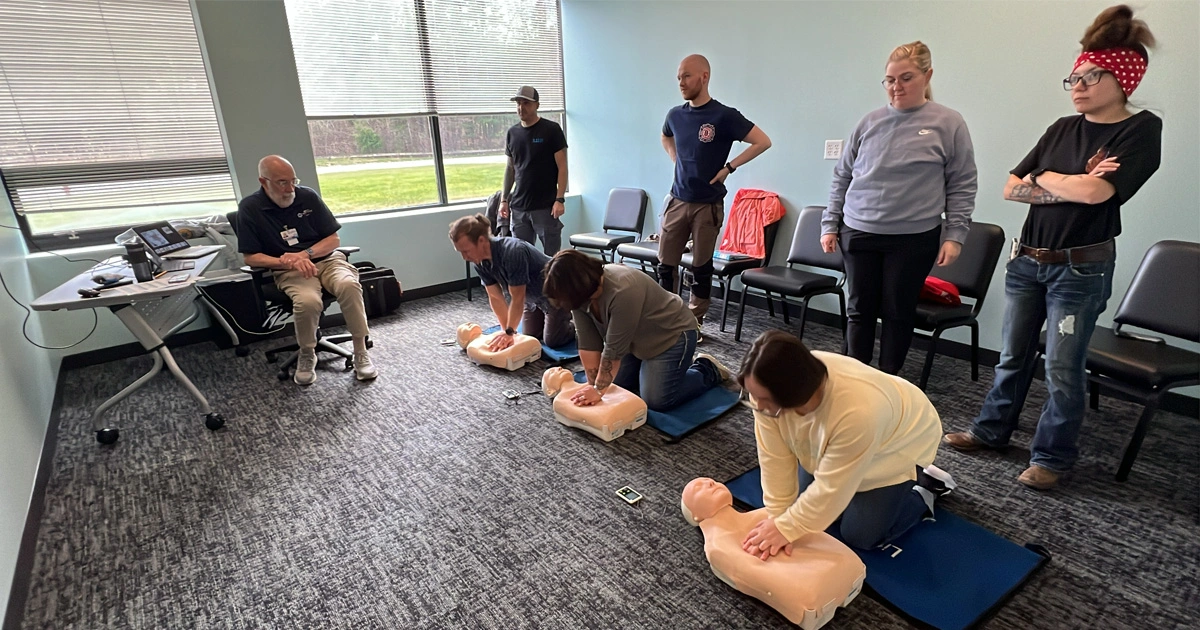
Every person who teaches CPR has likely wondered the same thing at some point: Will this training ever truly matter to someone sitting in this classroom?
The answer is yes, more often than most people realize. But the deeper truth is this: when someone learns CPR, first aid, or how to use an AED, they are not simply learning a technical skill. They are becoming part of a chain of survival that has the power to alter the trajectory of families, friendships, and entire communities.
That idea sits at the center of our upcoming book, The Saved Effect: True Stories of Lives Reclaimed by People Who Were Ready to Act.
As a Fire Captain, Paramedic, EMS educator, and founder of a national EMS training organization, I have spent more than four decades responding to emergencies and teaching others how to respond. My daughter and coauthor, Kiera Newbury, brings the perspective of a younger generation shaped by her work as an EMT and emergency room technician, along with her background in psychology and storytelling. Together, we began asking a question that became the foundation of this book:
What happens after a life is saved?
Not just in the emergency itself, but afterward. What happens to the child who grows up because a stranger started CPR? What happens to the spouse who gets more years with the person they love? What happens to the rescuer who discovers that one moment of courage changed another human being's future forever? That ripple effect is what we call the Saved Effect.
Emergencies Don't Announce Themselves
This is exactly why organizations like the Emergency Care & Safety Institute play such an important role in communities across the country. ECSI exists to give instructors, and education centers the tools to focus on what truly matters: training others to save lives. That mission reflects something every experienced responder understands deeply, emergencies do not announce themselves in advance.
Cardiac arrest does not wait for perfect timing. Choking emergencies do not happen only in hospitals. Life-threatening situations unfold in kitchens, restaurants, gyms, airports, classrooms, sporting events, and living rooms. And most often, the person standing closest is not a physician, paramedic, or nurse. It is an ordinary person, a parent, a coworker, a teenager, a grandparent, a coach, a friend.
That reality changes how we should think about CPR education.
From Certification to Confidence
For years, we have focused heavily on certification. Certification matters, of course. Standards matter. Scientific guidelines matter. Quality instruction matters. But confidence matters too. So does willingness, and the ability to move toward chaos instead of away from it.
One of the most common things survivors and rescuers tell us after these events is surprisingly simple: “I almost didn't do anything because I was afraid.” Afraid of doing it wrong. Afraid of hurting someone. Afraid of freezing. Afraid of the responsibility. Yet time and again, survival occurs because someone chose action over hesitation.
That is why CPR and AED education cannot be only about information transfer. It must also be about human empowerment. People need to leave training believing one thing: “If something happens, I can help.”
This is especially important in cardiac arrest. When sudden cardiac arrest occurs, every minute without CPR and defibrillation decreases the chance of survival significantly. Bystander intervention in those first few minutes often becomes the deciding factor between life and death.
What the Numbers, and the Stories, Tell Us
The data behind this is sobering and clarifying at the same time. Without bystander CPR, survival from sudden cardiac arrest is heartbreakingly low. With trained bystander CPR begun in those first minutes, the odds of survival rise dramatically. The single biggest variable is not the sophistication of the equipment that eventually arrives, it is whether the person standing closest is willing and able to begin.
That is the gap instructors close every single day. An education center that trains a hundred people this month has not simply issued a hundred cards. It has placed a hundred capable hands into kitchens and gyms and ballfields across its community, any one of which might be the difference for someone they will never meet. That is a quiet, enormous contribution to public health, and it deserves to be named as such.
Measuring More Than Survival
But survival is not the only outcome we should be measuring. We should also be measuring preparedness, community confidence, public willingness to intervene, and the cultural normalization of helping. The communities that save more lives are often the communities where action becomes expected rather than exceptional.
That cultural shift does not happen by accident. It happens because instructors, educators, training centers, and organizations show up every day to teach skills that many students hope they will never need to use. Yet someday, someone will.
The Long Arc of Time of a Single Act
One theme emerged again and again while we were writing The Saved Effect: rescuers rarely understand the long-term impact of their actions in the moment. A person performs CPR for six minutes. An AED is applied. A pulse returns. EMS arrives. And then life moves on.
But somewhere down the road, that survivor attends a wedding they otherwise would have missed. They become a parent. They watch their children graduate. They celebrate anniversaries. They start businesses. They comfort family members through difficult times. Entire futures exist because someone was trained and willing to act.
This is why CPR education is one of the most powerful forms of public health intervention we have, not because every trained person will save a life, but because every trained person increases the possibility that someone nearby will survive long enough to have another tomorrow. That possibility matters.
Making Preparedness Ordinary
As educators, instructors, and responders, we also have to recognize that training alone is not enough. We must keep making CPR education accessible, approachable, and relevant to the general public. People do not need to become medical professionals to save a life. They simply need enough knowledge, enough confidence, and enough willingness to act.
This is one reason AED accessibility and public awareness are so important. Communities that place AEDs in visible locations and normalize CPR education create environments where intervention becomes faster and more effective. Preparedness should not be rare, it should become part of everyday culture. The same way we teach children to call 911, wear seatbelts, or stop at red lights, we should build generations who understand that immediate action during a medical emergency can save a human life.
A Book About People
At its heart, The Saved Effect is not really a book about emergencies. It is a book about people. It is about what happens when ordinary individuals discover they are capable of extraordinary action in the moments that matter most. And it is about the responsibility all of us share to prepare others before those moments arrive.
That is why the mission of organizations like ECSI matters so deeply. Every CPR class taught. Every AED training completed. Every instructor certified. Every hesitant student encouraged. Every community program launched. All of it creates the possibility that one more person will survive.
And survival changes everything.
The ripple effect of preparedness extends farther than most people will ever realize. Somewhere in the future, someone will still be alive because another person took a CPR course seriously. Someone will still have a parent because an AED was nearby. Someone will still have more time because a bystander chose courage over hesitation.
That is the true power of emergency care education. It is not simply about responding to emergencies. It is about protecting futures. And sometimes, the person who changes everything is simply the one who was ready to act.
Be inspired. Get trained in CPR. Be ready and willing to act.
For more information about our book and where to purchase it, please visit our website.
Interested in learning CPR, AED, or First Aid? Click here to find an ECSI Education Center near you.
Learn more about ECSI training programs.
About the Author
Brad Newbury, MPA, NRP is the President and CEO of the National Medical Education & Training Center (NMETC) and the author of The Saved Effect: True Stories of Lives Reclaimed by People Who Were Willing to Act and the First Responder Advantage. With over 40 years of experience in firefighting and prehospital medicine, Brad has dedicated his life to one mission: helping others be ready—and willing—to act when it matters most.
A fire captain, paramedic, and educator, Brad has built NMETC into one of the nation’s premier institutions for EMS education. Founded in 2010, the organization has trained thousands of students around the world, empowering the next generation of lifesavers through skill, awareness, and preparedness.
A respected speaker and faculty member, Brad serves with the Beth Israel Deaconess Medical Center Fellowship in Disaster Medicine as Associate Director of Prehospital Disaster Operations. He has presented nationally and internationally on Fire & EMS leadership, disaster response, and the power of purpose-driven service.
Brad holds a master’s degree in Public Administration (Fire & Emergency Management) and a bachelor’s degree in Fire Science from Anna Maria College, along with executive education credentials from Harvard University’s T.H. Chan School of Public Health and the National Preparedness Leadership Initiative at the Harvard Kennedy School.